
G. Paul Rasiyah & Sons
A family enterprise since 1948
The story of G. Paul Rasiyah & Sons spans more than seventy-five years of enterprise. Established in Ceylon by Gnanam Paul Rasiyah and Mary Annette Chinniah, the company has evolved through trade, agriculture, exports, manufacturing, industrial technology, plantation management and consumer products. Each era inherited foundations built by the era before it. Each added something of its own.
1948
The foundation

Gnanam Paul Rasiyah and Mary Annette Chinniah
Gnanam Paul Rasiyah and Mary Annette Chinniah
The company’s story begins in 1948. According to company history, Gnanam Paul Rasiyah had become Sri Lanka’s largest trader in fabrics and gold. His outlook reached far beyond the island. With his wife, Mary Annette Chinniah, he travelled through Japan, Hong Kong, China, Malaya, France, Italy and the United Kingdom — studying markets, meeting suppliers and looking for the next opportunity.
Gnanam developed the enterprise around the strengths of the traditional trading house: recognising demand, understanding supply, maintaining trust and connecting customers with products from across the world.
Mary Annette stood beside him as co-founder and family matriarch. Together, they established more than a business. They formed a tradition of enterprise, independence, international curiosity and stewardship.
The principles of those early years continue to define the company:
Integrity in commerce
Relationships built for the long term
The confidence to enter new industries
An international outlook
Responsibility to the generation that follows
More than seventy-five years later, the company still bears its founder’s name.
Leadership era
Expansion and diversification
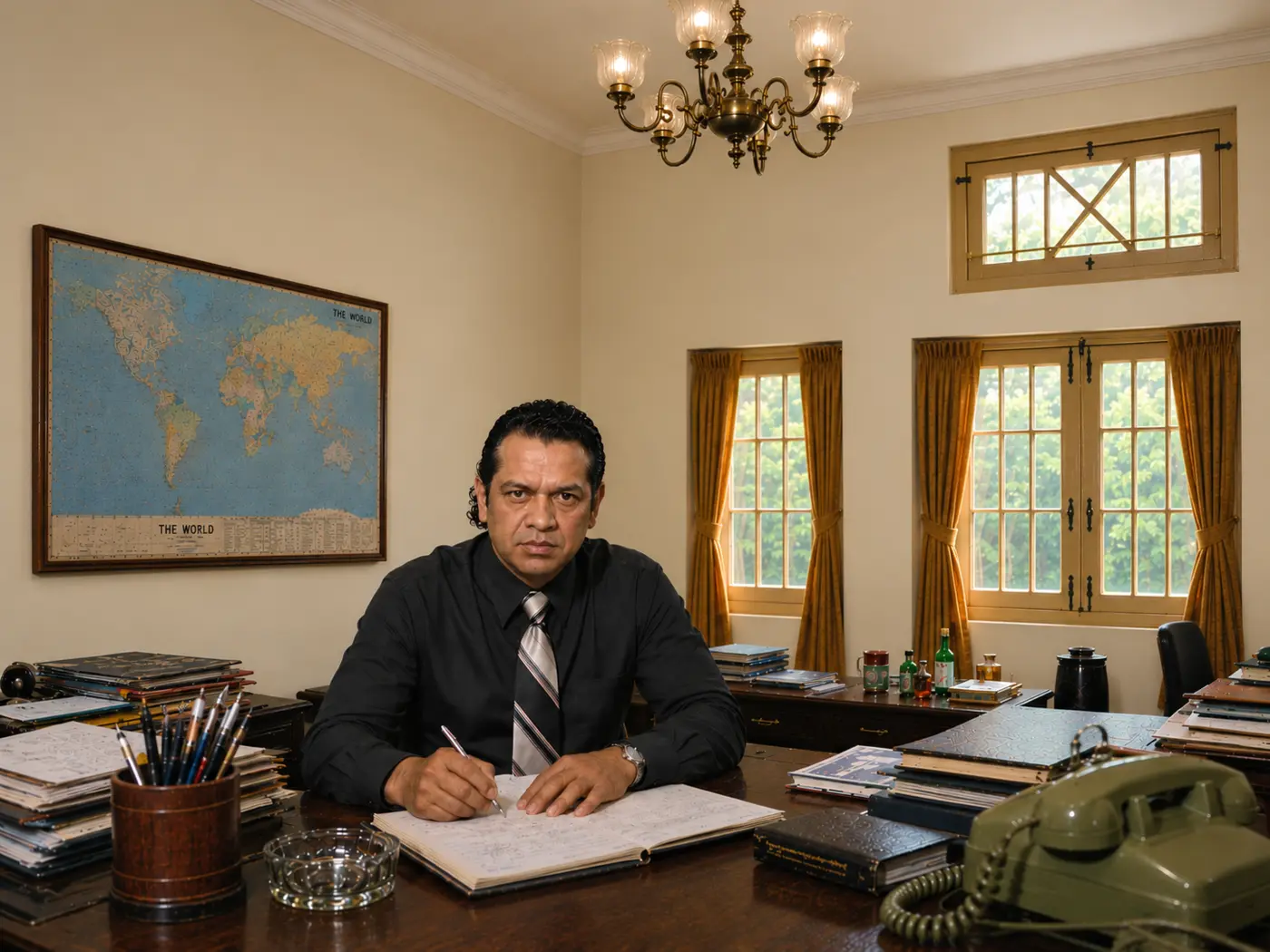
Chandra Paul Rasiyah
Chandra Paul Rasiyah
As Managing Director, Chandra Paul Rasiyah led the company through an important period of diversification. Building on its trading foundations, he expanded the enterprise into agriculture, including the importation and supply of seed potatoes.
The company also developed coconut-fibre exports, connecting a traditional Sri Lankan agricultural industry with overseas markets. Its move into furniture manufacturing added direct experience in production and value addition.
This era demonstrated a trait that would continue throughout the company’s history: G. Paul Rasiyah & Sons would not be confined to a single industry. Agriculture, exports, manufacturing and trade became a broader platform for the transformation that followed.
Era achievements:
Agricultural trade and seed-potato imports
Coconut-fibre exports
Furniture manufacturing
Wider experience in production and value addition
From 1982
Industrial technology and innovation

Nagendra Paul Rasiyah
Nagendra Paul Rasiyah
In 1982, Nagendra Paul Rasiyah led one of the most important changes in the company’s history: its expansion into industrial technology and industrial raw-material supply.
Sri Lankan manufacturers were becoming more technically sophisticated, yet access to specialist polymer technologies and international materials remained limited. The company developed capabilities across polyurethane, synthetic rubber, plastics, industrial adhesives, specialty chemicals and polymer technologies.
Polyurethane became especially important. The company’s role moved beyond conventional importing. It became a bridge between international producers, technical knowledge and Sri Lankan manufacturing — helping customers gain access to materials that could support new products and processes.
This era established the industrial identity that remains central to GPR Industrial Solutions today.
Era achievements:
Entry into industrial raw-material supply
Development of polyurethane capabilities
Expansion into synthetic rubber, plastics and adhesives
Connection of international technology with local manufacturing
From 1990
Industrial growth and international relationships

The late Jayendra Paul Rasiyah
The late Jayendra Paul Rasiyah
In 1990, Jayendra Paul Rasiyah assumed leadership as Managing Director. He continued the industrial legacy and strengthened the company’s specialist position within Sri Lankan industry.
His tenure placed particular emphasis on relationships that could endure. The company developed and strengthened ties with major Japanese chemical and materials manufacturers. These relationships connected Sri Lankan manufacturers with advanced polymer, elastomer and specialty-chemical industries.
Jayendra’s stewardship reinforced a commercial philosophy present from the beginning: great trading relationships are measured in decades, not individual transactions.
Era achievements:
Consolidation as a specialist industrial supplier
Deeper international principal relationships
Stronger connections to Japanese materials and chemical technology
Continued emphasis on reputation, continuity and long-term trade
Family continuity
Margret Vais

Margret Vais
Margret Vais
Wife of the late Jayendra Paul Rasiyah and mother of Julian Paul Rasiyah.
2016–present
Integration and value addition

Julian Paul Rasiyah
Julian Paul Rasiyah
In 2016, Julian Paul Rasiyah, grandson of Gnanam Paul Rasiyah and Mary Annette Chinniah, assumed leadership of the family enterprise.
He inherited nearly seven decades of accumulated commercial experience: the founders’ trading instinct, the expansion into agriculture and manufacturing, the industrial transformation and the international relationships strengthened under his father.
The task of the present era is not only to preserve that inheritance, but to decide what it can become. The strategy is centred on four principles:
Integration
Value addition
Internationalisation
Building Sri Lankan enterprise
The industrial business continues through GPR Industrial Solutions. The group’s renewed agricultural capability is being developed through GPR Plantation Management Services. Vascora creates routes for finished food, bedding and growth-media products into the United States and Canada.
Together, these activities move the group towards a more integrated model — from land and production to value addition, brands, distribution and world markets.
Three eras of inheritance. One continuing enterprise.
Find opportunity. Understand the market. Build lasting relationships. Introduce useful technology. Create value. Protect the family name. Leave the enterprise stronger for those who follow.